Author: admin

  • Christmas Dinners Around the World: 24 Festive Flavour Facts

    🎄

    A TrueTasteMeter Global Advent Special

    As December arrives, kitchens around the world begin to fill with warm spices, family traditions, and dishes that carry centuries of culture. Christmas may be celebrated differently everywhere, but food is the universal language of belonging.

    To celebrate our first festive season at TrueTasteMeter, we’ve created a special 24-day flavour journey. Each “door” reveals a dish, a tradition, or a fascinating fact that makes Christmas unique across the globe.

    Whether you’re a foodie, a traveller, or simply curious about how other families celebrate, this guide brings you closer to the heart of cultures worldwide, one plate at a time.


    🌍 24 Christmas Food Traditions From Around the World


    🇮🇹 Italy – The Feast of the Seven Fishes

    In many Italian households, Christmas Eve is a seafood celebration: baccalà, clams, fried calamari, octopus salad and more. It’s a symbolic meal steeped in tradition, simplicity, and coastal flavours.


    🇯🇵 Japan – A Bucket of Christmas Cheer

    Japan’s beloved Christmas meal? Fried chicken. Families pre-order special Christmas buckets weeks in advance, a quirky but iconic tradition that has become part of modern Japanese culture.


    🇵🇱 Poland – The 12-Dish Christmas Eve Supper

    Wigilia, the Christmas Eve feast, features 12 symbolic dishes. Highlights include beetroot soup, pierogi, carp and poppy-seed desserts. The evening begins when the first star appears in the sky.


    🇫🇷 France – Le Réveillon

    A luxurious late-night feast enjoyed after midnight mass. Expect oysters, foie gras, champagne, and the beautiful bûche de Noël, a chocolate yule log cake.


    🇯🇲 Jamaica – Rum-Soaked Festivities

    Jamaicans prepare black cake, a rich fruit cake soaked in rum for weeks or even months. It is paired with sorrel, a bright, ginger-spiced Christmas drink.


    🇪🇸 Spain – Sweet Turrón & Seafood Feasting

    Christmas begins with prawns, lobster, and fish dishes, and ends with slices of turrón — the almond nougat loved across Spain.


    🇲🇽 Mexico – Tamales & Pozole

    Christmas gatherings revolve around tamale-making, where generations cook together. Pozole rojo, a delicious hominy stew — is another festive favourite.


    🇬🇧 United Kingdom – The Classic Roast

    Turkey or goose, pigs in blankets, golden roast potatoes, gravy and Christmas pudding. It’s nostalgic, comforting, and full of richness.


    🇩🇪 Germany – The Home of Christmas Markets

    Germany is famous for its Christmas markets filled with:

    • Bratwurst
    • Gingerbread
    • Roasted almonds
    • Mulled wine
    • Families enjoy roast goose, potato dumplings and red cabbage on Christmas Eve.

    🇸🇪 Sweden – The Julbord

    This abundant Christmas buffet includes cured salmon, meatballs, herring, cheeses and indulgent desserts. It’s Scandinavian comfort in its purest form.


    🇵🇭 Philippines – Noche Buena at Midnight

    After midnight mass, Filipino families gather for a huge feast featuring lechon (roast pig), sweet spaghetti, queso de bola and ensaymada. It is one of the world’s most joyful Christmas traditions.


    🇺🇸 United States – Ham, Sweet Potatoes & Pie

    Many American families enjoy glazed ham, mac ’n’ cheese, sweet potato casseroles and pumpkin or pecan pie.


    🇫🇮 Finland – The Christmas Almond

    Rice porridge is served with one hidden almond — whoever finds it wins a small gift or good luck for the following year.


    🇬🇷 Greece – Christopsomo & Roast Lamb

    Christopsomo (“Christ’s Bread”) is a sweet, spiced bread baked specially for Christmas. Lamb and potatoes often complete the feast.


    🇦🇺 Australia – Seafood in the Sun

    As Christmas arrives in summer, Australians favour cold seafood, fresh salads, barbecues and pavlova under bright skies.


    🇵🇹 Portugal – Bacalhau & Simplicity

    Salted cod with potatoes and cabbage is the heart of Portuguese Christmas Eve — simple, humble, and deeply traditional.


    🇳🇴 Norway – Pinnekjøtt

    Dried lamb ribs steamed until tender, served with mashed swede and potatoes — rustic, hearty, and very Nordic.


    🇧🇷 Brazil – A Tropical Christmas

    Turkey is served alongside tropical fruit, rice salads and farofa. Christmas in Brazil is colourful, lively and full of variety.


    🇿🇦 South Africa – A Festive Braai

    Christmas often includes grilled meats, salads and chilled desserts — all enjoyed outdoors in the sunshine.


    🇮🇸 Iceland – 13 Yule Lads

    Instead of one Santa, Iceland has 13 mischievous Yule Lads. Families enjoy smoked lamb, leaf bread, and rich desserts.


    🇳🇬 Nigeria — Jollof Rice & Festive Feasting

    In Nigeria, Christmas is vibrant, joyful, and centred around big communal meals. The star of the table is Jollof Rice, a rich, spicy tomato-based rice dish often served with fried plantain, grilled chicken, or goat.


    🇨🇭 Switzerland – Fondue & Raclette

    Melting cheese is a national treasure. Fondue and raclette are popular Christmas meals, creating warm, cosy evenings.


    🇩🇰 Denmark – Roast Pork & Risalamande

    Crispy roast pork with caramel potatoes, followed by risalamande — rice pudding with hidden almonds and cherry sauce.


    🎁 Day 24 – A TrueTasteMeter Favourite

    To close our advent journey, we spotlight two Christmas traditions close to our heart

    🇮🇹🇩🇪 Italian Panettone & German Stollen

    Celebrating both sides of our family traditions

    🇮🇹 Panettone (Italy)

    Panettone is Italy’s iconic Christmas sweet, a tall, buttery, citrus-studded bread that fills the home with warmth the moment it’s sliced. For many Italian families, including mine, Christmas simply didn’t begin until my Nonna handed each grandchild their own Panettone. It was a tradition that made the season feel magical, and no festive table ever felt complete without it.

    🇩🇪 Stollen (Germany)

    Germany’s Christmas classic, Stollen, is a dense, spiced fruit loaf enriched with nuts, dried fruit, and often marzipan, then finished with a snowy layer of icing sugar. Its distinctive shape is said to symbolise the baby Jesus wrapped in swaddling clothes a beautiful piece of culinary history that still lives on today.

    Why Two Dishes for Day 24?

    TrueTasteMeter celebrates real traditions and for our family, Christmas is a blend of two cultures: Italian and German. Panettone represents my heritage, while Stollen reflects Pete’s. Together, they tell a perfect story for Christmas Eve: two flavours, two cultures, one festive table.


    Final Thoughts

    Christmas looks different across the globe but one thing remains the same: food brings people together. From Italian seafood feasts to Filipino midnight celebrations and Scandinavian comfort dishes, each tradition carries a story passed down through generations.

    This December, may your table be full, your kitchen warm, and your heart open to flavours from around the world.

    Merry Christmas from Truetastemeter x
  • The True Italian Way: The Science of Al Dente Pasta

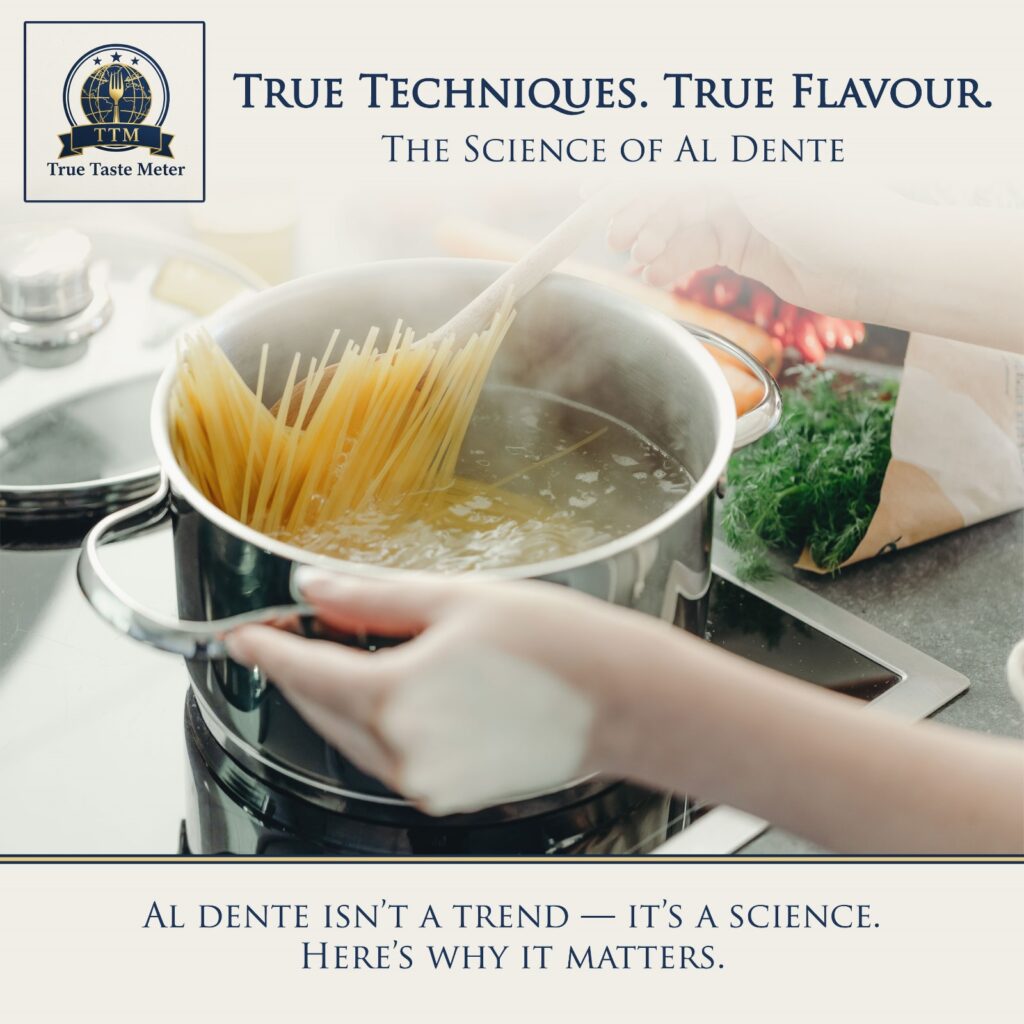
    When Italians talk about pasta, one rule stands above all others: it must be cooked al dente. Literally meaning “to the tooth,” al dente describes pasta that is firm, structured, and slightly resistant when bitten. It isn’t undercooked. It’s correctly cooked. And behind this deeply rooted tradition lies real food science that explains why Italians stop the cooking process earlier than many other cultures do.

    Below is a clear, simple look at the science, technique, and authenticity behind this essential part of Italian cooking.


    What Al Dente Actually Means

    Al dente pasta is not hard or chalky. True al dente has a very specific texture:

    • A firm, springy bite
    • A smooth outer surface
    • A gently resistant centre
    • Enough structure to hold its shape when tossed in hot sauce

    It is the opposite of the soft, swollen, slightly mushy texture that appears when pasta is cooked past its ideal point.


    The Science Behind the Bite

    Starch Gelatinisation

    As pasta cooks, its starch granules absorb water and swell. If they cook for too long, the granules burst and release starch, making pasta sticky and soft.

    Stopping the process at the right moment preserves:

    • Structure
    • Texture
    • The ability to hold sauce

    Overcooked pasta has gone beyond this stage, and that’s why it loses its shape and becomes mushy.

    Protein Structure

    High-quality Italian pasta is made from durum wheat. During cooking, its proteins create a network that gives pasta its firm, elastic texture.

    When pasta is cooked to al dente, this protein structure stays strong. If cooked too long, it weakens and becomes limp.

    That signature “bite” Italians love is directly tied to this protein network.

    Better Sauce Absorption

    Italian cooking is not pasta followed by sauce. It is pasta with the sauce.

    Finishing pasta in the pan brings magic:

    • It absorbs flavour
    • It coats evenly
    • It thickens the sauce naturally through gentle starch release

    If pasta is fully cooked in the water, the structure closes up and stops absorbing flavour. The sauce simply slides off.

    Lower Glycaemic Impact

    Because al dente pasta is less broken down, it digests more slowly. This means:

    • A steadier release of energy
    • Less of a spike in blood sugar

    Many Italians consider al dente not only better for taste but better for the body too.


    Why Italians Don’t Overcook Pasta

    For Italians, pasta is a craft. Timing is respect.

    Overcooked pasta feels:

    • Heavy
    • Lifeless
    • Disconnected from its sauce

    Al dente shows care, technique, and knowledge passed down through generations.


    How to Achieve Perfect Al Dente Every Time

    Use Plenty of Boiling Water

    Pasta needs space to move freely so it cooks evenly.

    Salt the Water

    The water should taste like a light broth. This seasons the pasta from the inside out.

    Taste, Don’t Time

    Packet timings are guidelines. Start checking the pasta two minutes before the shortest recommended time.

    Stop Just Before It’s Done

    If the centre is still slightly firm, that’s the moment to remove it.

    Finish It in the Sauce

    Move the pasta straight into the pan with your sauce. Add a spoonful of pasta water. Let everything simmer together for one or two minutes. This final step creates the true Italian texture and flavour.


    Authenticity in Every Bite

    Around the world, people often cook pasta until it becomes very soft because they assume softness means “done.”
    In Italy, softness simply means overcooked.

    Al dente is the authentic method because it is:

    • Scientifically balanced
    • Texturally superior
    • Better at holding sauce
    • True to regional Italian tradition

    Mastering al dente is one of the key steps in cooking Italian food the way Italians actually eat it.


    Final True Taste Meter Verdict

    Al dente pasta isn’t undercooked. It’s perfectly cooked.
    The technique is built on science, tradition, and the desire to bring out the best in every ingredient.

    If you want your Italian dishes to taste truly authentic, mastering al dente is one of the most important skills you can learn.


  • Nonna’s Polpetta

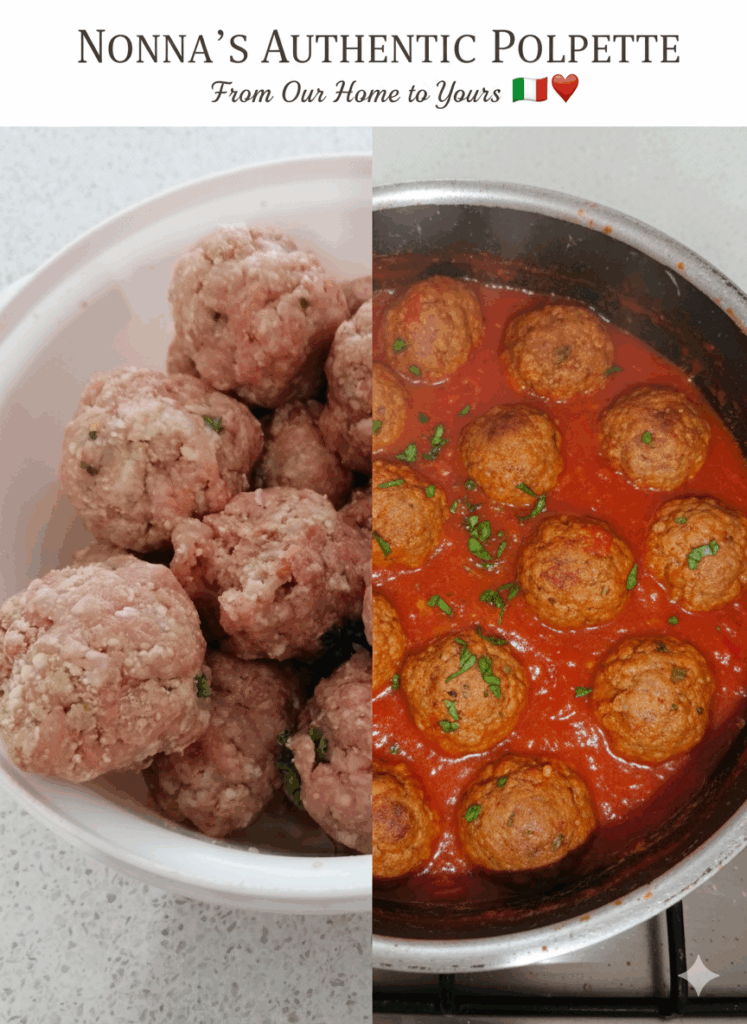
    Nonna’s Authentic Polpette al Sugo (Italian Meatballs in Sauce)

    ​This one is special to me 🇮🇹❤️ My Nonna, from a tiny village called Foglianise in Benevento, made meatballs (polpette) that tasted like comfort, history, and home. A traditional recipe with no shortcuts—using stale bread soaked in milk for ultimate tenderness—and it absolutely deserves to be shared.

    ​Key to Authenticity: The Panade

    ​Nonna’s secret to a juicy polpetta is the panade (the soaked bread). This replaces filler with moisture, ensuring the meatballs stay tender while simmering in the sauce.

    ​Ingredients (Makes Approx. 20-25 Polpette)

    IngredientQuantity (Adjust to taste)
    Ground Meat500g (Mix of 50% Beef, 50% Pork)
    Stale Bread2 thick slices (crusts removed)
    Milk120ml (approx.)
    Parmigiano Reggiano60g (freshly grated)
    Egg1 large (lightly beaten)
    Fresh Parsley2 Tbsp (finely chopped)
    Dried Oregano1 tsp
    Garlic1 clove (minced or finely grated)
    Breadcrumbs3 Tbsp (if needed for binding)
    Salt and Black PepperGenerous seasoning
    For Frying (Optional)Olive Oil (a light coating)

    Method: No Shortcuts, Just Flavour

    ​Step 1: Prepare the Base (The Panade)

    1. Soak the Bread: Tear the stale bread into small pieces and place it in a small bowl. Pour the milk over the bread and let it soak for about 5-10 minutes until the bread is fully saturated and soft.
    2. Squeeze: Gently squeeze the excess milk out of the bread. Reserve the milk—you might need it later if the mix is too dry. Place the moist bread into a large mixing bowl.

    ​Step 2: Combine the Filling

    1. Mix Ingredients: To the bread in the large bowl, add the ground beef and pork mix, the freshly grated Parmigiano Reggiano, the beaten egg, parsley, oregano, garlic, and the generous seasoning of salt and black pepper.
    2. Gently Combine: Using your hands, gently mix all the ingredients together. Nonna’s Tip: Do not over-mix! Over-mixing makes the meatballs tough. Mix just until everything is combined and uniform. If the mixture is too wet, add a tablespoon of breadcrumbs at a time until it’s easy to roll.

    ​Step 3: Roll and Shape

    1. Form the Polpette: Scoop up a generous amount of the mixture into your hand and gently roll it into balls. Nonna always made them bigger than standard meatballs—this made them lovely and juicy, preventing them from drying out during the long simmer.

    ​Step 4: Simmer in Sauce

    1. Prepare the Sauce: Make your favourite authentic Italian garlicy tomato sauce in a large, wide pot. The key is a rich, slow-cooked sauce.
    2. Gently Simmer: Once the sauce is simmering, gently nestle the meatballs into the sauce. They should be mostly submerged.
    3. Cook: Cover the pot partially and let the meatballs gently simmer in the sauce until they are perfectly tender, usually for 45 minutes to an hour. The simmering process allows the flavour of the meat and the sauce to meld beautifully.

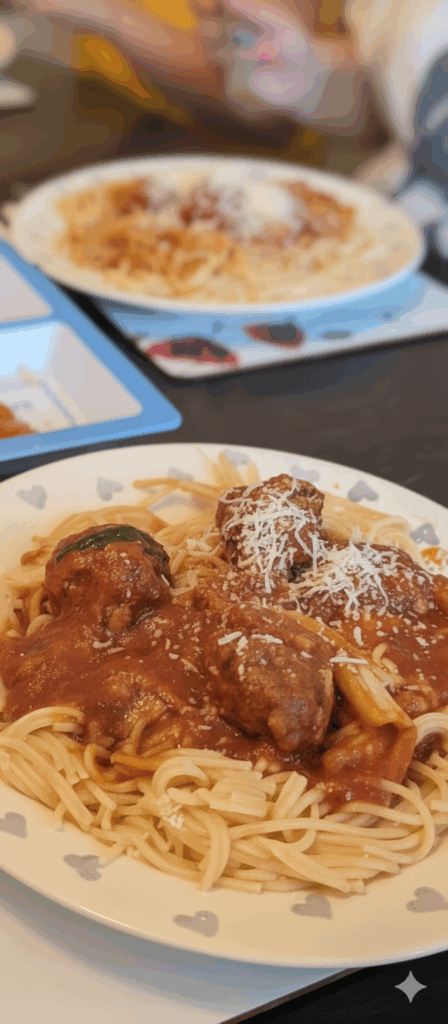
    ​Serve piping hot over spaghetti, or just enjoy them on their own with a crusty piece of Italian bread!

  • True Taste Meter Review: Paella

    The Med Terrace, Eden Project, Cornwall

    Cuisine: Mediterranean / Spanish

    Reviewer Type: Cultural Reviewer (50% Weighted Assessment)

    ​If you are looking for an immersive Mediterranean experience that captures the vibe of the south, The Med Terrace is an outstanding location. We visited recently and found the atmosphere—enhanced by the surrounding biome—to be unique and highly authentic. The Paella itself provided a fascinating test of culinary technique versus presentation.

    MetricScore / 100Notes
    Authenticity Score78 / 100High core score driven by successful execution of Paella technique.
    Atmosphere & Immersiveness95 / 100Exceptional, highly unique Mediterranean environment within the biome.
    Food Quality & Taste85 / 100Delicious, with clear depth of flavour and correct ingredients.

    TTM Authenticity Breakdown (Paella Focus)

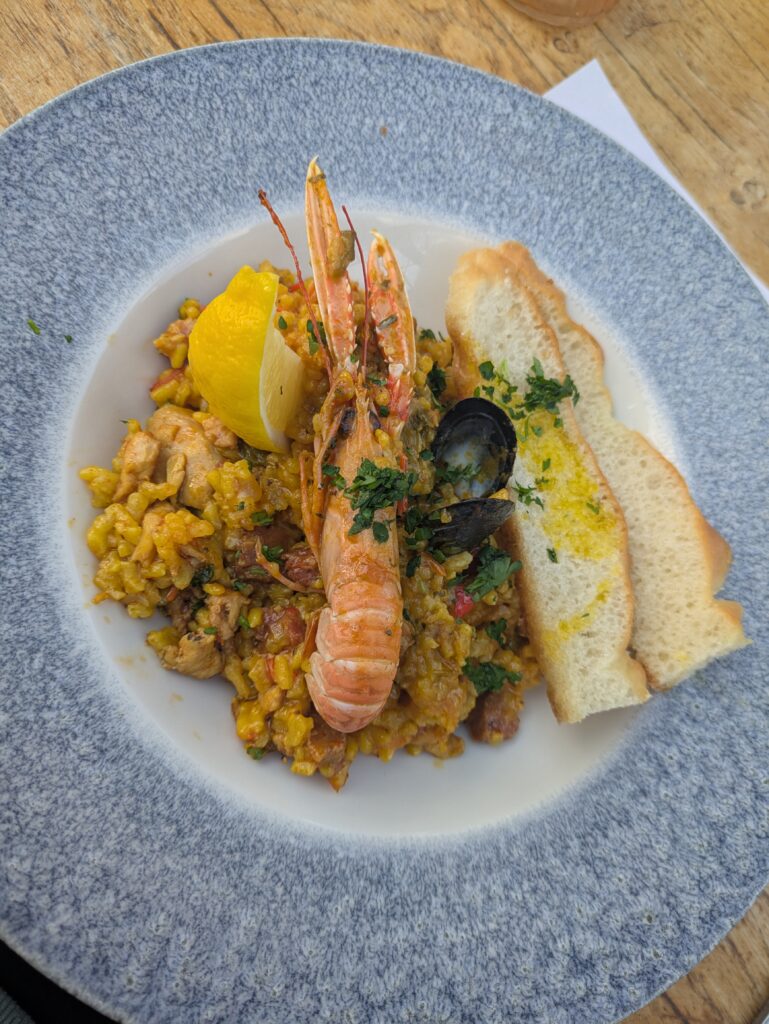
    (Photo of Paella confirms plating style)

    ​Cultural Fidelity Highlights (The Authentic Wins)

    • Socarrat Achieved: The dish contained a clear, desirable crust of rice (socarrat) stuck to the bottom, which is the ultimate hallmark of a correctly made, authentic Paella.
    • Ingredients: Clear presence and flavour of genuine saffron and a rich seafood stock (fumet).
    • Texture: The rice was firm and separated (al dente), indicating the use of a proper Paella rice type (e.g., Bomba/Calasparra).
    • Atmosphere: The unique setting of the biome, with the surrounding birds and plants, delivered an exceptional and highly immersive Mediterranean ambiance.

    ​Areas for Improvement

    • Non-Traditional Plating: The Paella was served plated, rather than in a traditional, wide, shallow paellera pan. This compromises heat retention and is considered a significant deviation from authentic serving custom.
    • Service Tools: No appropriate tools were provided for dealing with the shellfish, making the experience messy and detracting from the overall dining ease.
    • Ingredient Presentation: The olives were cold and pre-pitted, losing some of the fresh, rustic character associated with authentic Mediterranean appetizer service.

    Conclusion

    ​”The Med Terrace” provides an unforgettable dining setting that perfectly captures the Mediterranean spirit. The Paella is technically very strong—the presence of the socarrat is a major win for authenticity—but the presentation requires refinement to meet the full TTM standard.

  • Making your own Cornish pasty

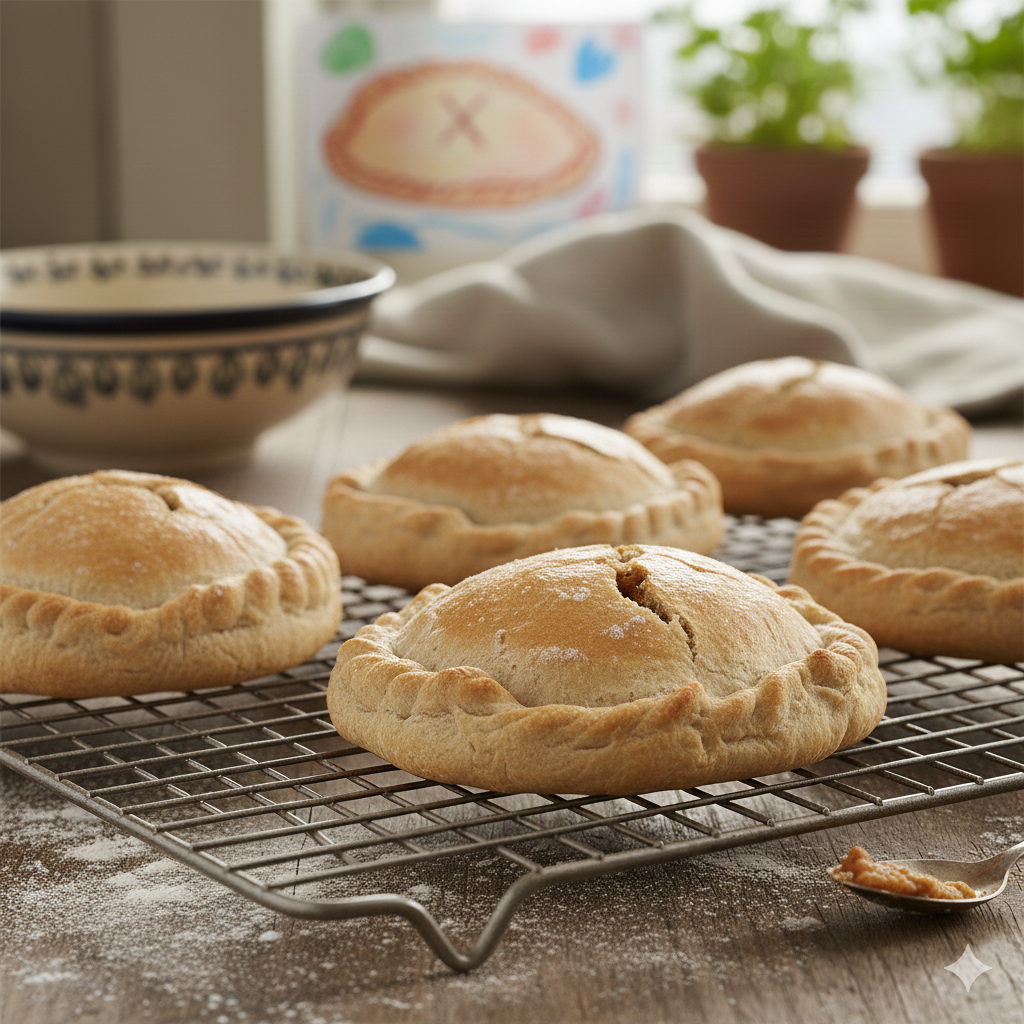
    Making your own authentic Cornish pasty is a very rewarding feat! The Cornish pasty is a traditional Cornish recipe, filled with a hearty mixture of beef, potatoes, onion, and swede (rutabaga). Here’s a step-by-step guide to making them at home or where ever you make them.

    Ingredients:

    For the pastry:

    • 500g (4 cups) plain flour
    • 250g (1 cup) cold unsalted butter (cubed)
    • 1 tsp salt
    • 150-200 ml cold water

    For the filling:

    • 300g (10 oz) beef skirt or chuck (cut into small cubes)
    • 2 medium potatoes (peeled and finely diced)
    • 1 medium onion (finely chopped)
    • 1 small swede (rutabaga), peeled and finely diced
    • Salt and pepper to taste
    • 1 tbsp fresh parsley (optional)
    • 1 tbsp butter (optional)
    • 1 egg (for egg wash)

    Step-by-Step Instructions:

    1. Prepare the Pastry:

    • Mix the dry ingredients: In a large mixing bowl, sift the flour and salt together.
    • Cut the butter: Add the cold, cubed butter to the flour. Using your fingers or a pastry cutter, rub the butter into the flour until the mixture resembles breadcrumbs.
    • Add water: Gradually add the cold water, 1 tablespoon at a time, mixing until the dough comes together. You may need slightly more or less water depending on the consistency.
    • Knead the dough: Turn the dough onto a floured surface and knead it gently for 1-2 minutes until smooth.
    • Chill: Wrap the dough in cling film and place it in the fridge for at least 30 minutes to firm up.

    2. Prepare the Filling:

    • Chop the filling ingredients: Peel and dice the potatoes, swede, and onion into small, even pieces. Cut the beef into small cubes, about 1cm each.
    • Mix the filling: In a bowl, combine the diced beef, potatoes, onion, and swede. Season generously with salt and pepper. If you like, add some fresh parsley for extra flavor.
    • Optional butter: Some people like to add a small knob of butter to the filling to keep it rich, but it’s not traditional and can be skipped if you want to keep it lighter.

    3. Assemble the Pasties:

    • Preheat the oven: Preheat your oven to 180°C (350°F).
    • Roll out the pastry: On a lightly floured surface, roll the chilled pastry out into a large rectangle or circle, about 3-4mm thick.
    • Cut out circles: Using a large bowl or a pastry cutter, cut out rounds from the pastry, about 20-25 cm (8-10 inches) in diameter.
    • Add the filling: Place a generous amount of the filling in the center of each pastry circle. Don’t overfill, or the pasty will be hard to seal. Leave a border around the edges.
    • Seal the pasty: Fold the pastry over the filling to form a half-moon shape. Press the edges together and crimp them tightly to seal the pasty. You can use your fingers or a fork to crimp the edges. Make sure there’s no gap where the filling could leak out.
    • Create a steam hole: Use a sharp knife to make a small slit or hole on top of the pasty to allow steam to escape during baking.

    4. Bake the Pasties:

    • Egg wash: Beat the egg and brush it over the top of each pasty to give them a golden, shiny finish.
    • Bake: Place the pasties on a baking sheet lined with parchment paper and bake them in the preheated oven for 45-55 minutes, or until the pastry is golden brown and crisp.

    5. Enjoy!

    • Once baked, let the pasties cool for a few minutes before serving. They’re best eaten warm, but you can also enjoy them cold (they’re perfect for picnics!).

    Tips:

    • Pastry Tip: If you’re short on time, you can use store-bought shortcrust pastry. However, homemade pastry will give you the best results.
    • Filling Variations: While the classic filling is beef, potatoes, swede, and onion, feel free to add other vegetables or swap out beef for lamb or chicken if you prefer.
    • Freezing: Cornish pasties freeze really well! If you want to make a big batch, freeze them before baking and then bake from frozen, adding an extra 10-15 minutes to the baking time.

    Now you have your own homemade Cornish pasties—enjoy!

  • True Taste Meter Review: Cornish Pasty

    ​Philip Warrens Butchers, Launceston, Cornwall

    Cuisine: Cornish (Regional British)

    Reviewer Type: Cultural Reviewer

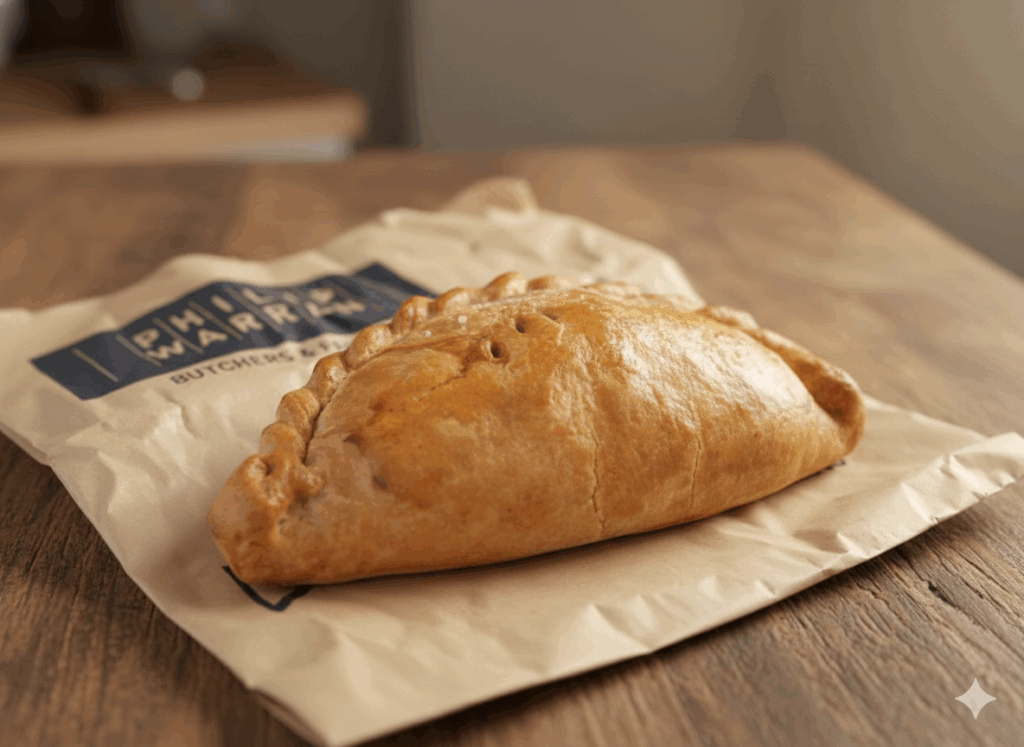
    ​If you are looking for the definitive, textbook example of an authentic Cornish Pasty, look no further than Philip Warrens Butchers. Reviewed by a Launceston local, this pasty doesn’t just meet the PGI (Protected Geographical Indication) standard, it defines it.

    What Makes a Cornish Pasty Authentic?

    ​Authenticity in a Cornish Pasty is legally defined by its Protected Geographical Indication (PGI) status, ensuring it honors the traditional food of Cornish miners. A pasty can only be considered authentic if it meets every one of these criteria:

    1. Origin: It must be prepared and baked in Cornwall.
    2. Shape: It must be D-shaped.
    3. Filling: The filling must be comprised only of rough diced or minced beef, sliced or diced potato, swede (sometimes called turnip), and onion. No other vegetables are permitted.
    4. Preparation: The meat and vegetables must be layered and put into the pastry raw, cooking only by the heat of the oven.
    5. Sealing: The pasty must be sealed by crimping the edges along the side, never across the top.
    6. Seasoning: A generous amount of salt and pepper is mandatory to create the moisture and flavour profile needed to feed a working miner.

    ​Any variation in these ingredients, preparation methods, or geographic origin means the product, while potentially good, is legally not a Cornish Pasty.

    True Taste Meter Rating

    MetricScore / 10Notes
    Authenticity Score10 / 10Perfect adherence to PGI standards combined with exceptional quality.
    Form & Structure10 / 10D-shaped, side-crimped, firm pastry that successfully holds the filling.
    Food Quality & Taste10 / 10Fantastic quality beef, perfectly moist, and expertly seasoned.

    TTM Authenticity Breakdown

    ​Cultural Fidelity Highlights (The Authentic Wins)

    • PGI Compliance: The pasty adheres to every PGI rule: D-shaped, crimped on the side, and the filling was raw when sealed.
    • Ingredient Purity: The filling contains only the four mandatory ingredients: rough-diced beef, potato, swede (turnip), and onion. Absolutely no non-traditional additions (like carrots or peas) were present.
    • Preparation & Quality: The meat was noted to be of excellent quality, moist, and cooked down to create a rich, natural gravy—a sign of the high-quality ingredients used from the start.
    • Seasoning: The seasoning was appropriately strong with salt and pepper, giving it that classic, robust Cornish flavour.

    ​Areas for Improvement

    • ​(None) — This product represents the pinnacle of its cuisine’s cultural fidelity and quality.

    ​Conclusion

    ​The Cornish Pasty from Philip Warrens Butchers is a benchmark product. The 9.9 TTM score reflects its flawless PGI compliance and exceptional quality, making it a mandatory stop for anyone seeking the true flavour of Cornwall. The widespread praise from local residents and visitors is entirely justified.

  • True Taste Meter Review: Greek On The Docks

    ​Gloucester, UK

    Cuisine: Greek

    What Makes Greek Food Authentic.

    ​Authentic Greek cuisine is fundamentally defined by the principle of simplicity, relying on high-quality, regionally sourced ingredients prepared with minimal intervention. At its heart lies high-grade extra virgin olive oil, which serves as both a cooking fat and a primary seasoning element. Authenticity is immediately evident in the use of fresh herbs (oregano, thyme, dill), lemon, and distinct products like genuine PDO Feta (sheep and goat milk, never cow’s milk) and Kalamata olives. Preparation techniques are also critical: meats like souvlaki must ideally be cooked over charcoal or an open flame, and dishes often emphasize slow cooking or grilling. The presence of traditional, rustic sides—like pure Horiatiki salad (without lettuce or vinegar) and dishes reflecting regional specificity (Cretan dakos, Thessalian spetzofai)—further confirms a restaurant’s commitment to cultural fidelity over broad commercial appeal.

    Review: Reviewer Type- Local Reviewer

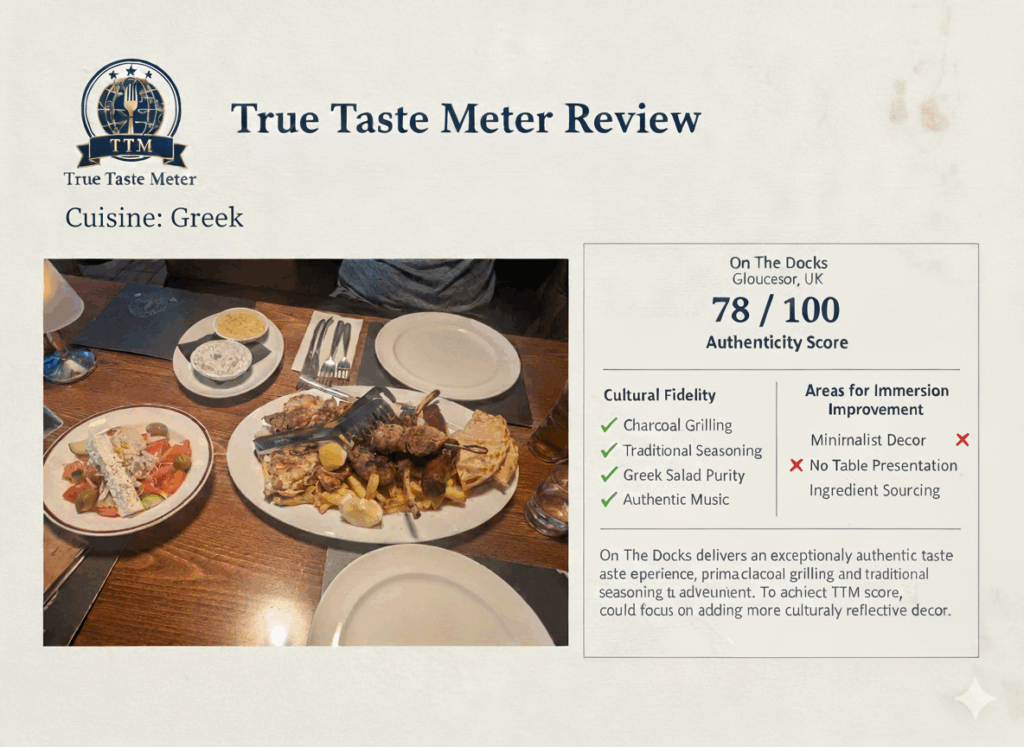
    ​If you’re searching for truly authentic Greek food in Gloucester, put Greek On The Docks at the top of your list. We visited recently as a couple and, from a taste and quality perspective, we were not disappointed. This restaurant delivers a fabulous core culinary experience that earns its high authenticity marks.

    True Taste Meter Score

    MetricScoreNotes
    Authenticity7.8High
    Service9.0Excellent
    Taste9.5High

    TTM Authenticity Breakdown

    Cultural Fidelity Highlights (The Authentic Wins)

    • Charcoal Grilling: The Mixed Grill (specifically the Souvlaki) was cooked over charcoal, providing a traditional and highly authentic flavor profile that elevates the cuisine.
    • Greek Salad Purity: The Horiatiki (Greek Salad) was authentic—pure vegetables (no lettuce) and dressed correctly with quality oil, not vinegar, respecting the traditional method.
    • Atmosphere: Authentic Greek music was utilized, creating a pleasant and culturally appropriate background experience.

    ​Areas for Improvement

    • Decor/Design: The establishment has a minimalist, bistro feel, which detracts from the traditional Greek taverna aesthetic, creating a disconnect between the food quality and the dining environment.
    • Presentation: No specific traditional or unique touches (pottery, oil containers) were noted on the table setting.
    • Ingredient Sourcing: The menu used correct Greek terminology but did not explicitly specify the sourcing of key Greek ingredients (e.g., PDO Feta, Kalamata olives), missing an opportunity to guarantee authenticity.

    ​Conclusion

    ​”On The Docks” delivers an exceptionally authentic taste experience, primarily due to the use of charcoal grilling and accurate traditional seasoning. This is a must-visit for the food itself. To achieve a perfect TTM score, the restaurant could focus on adding more culturally reflective decor to match the quality of the cuisine and service.

  • Welcome!

    Welcome to True Taste Meter! 🤗

    We’re so excited to introduce a space dedicated to rating how authentic restaurants and recipes really are, based on real experiences, real flavours, and honest reviews.

    Whether it’s a family-run spot serving dishes passed down through generations, or a recipe claiming to be “100% authentic,” we want to help people discover what truly tastes like the real deal.

    Follow along as we explore cuisines, share food stories, and highlight restaurants that stay true to their roots.
    🍜🌮🥟

    ✨ True Taste Meter — Find the real taste behind the plate.