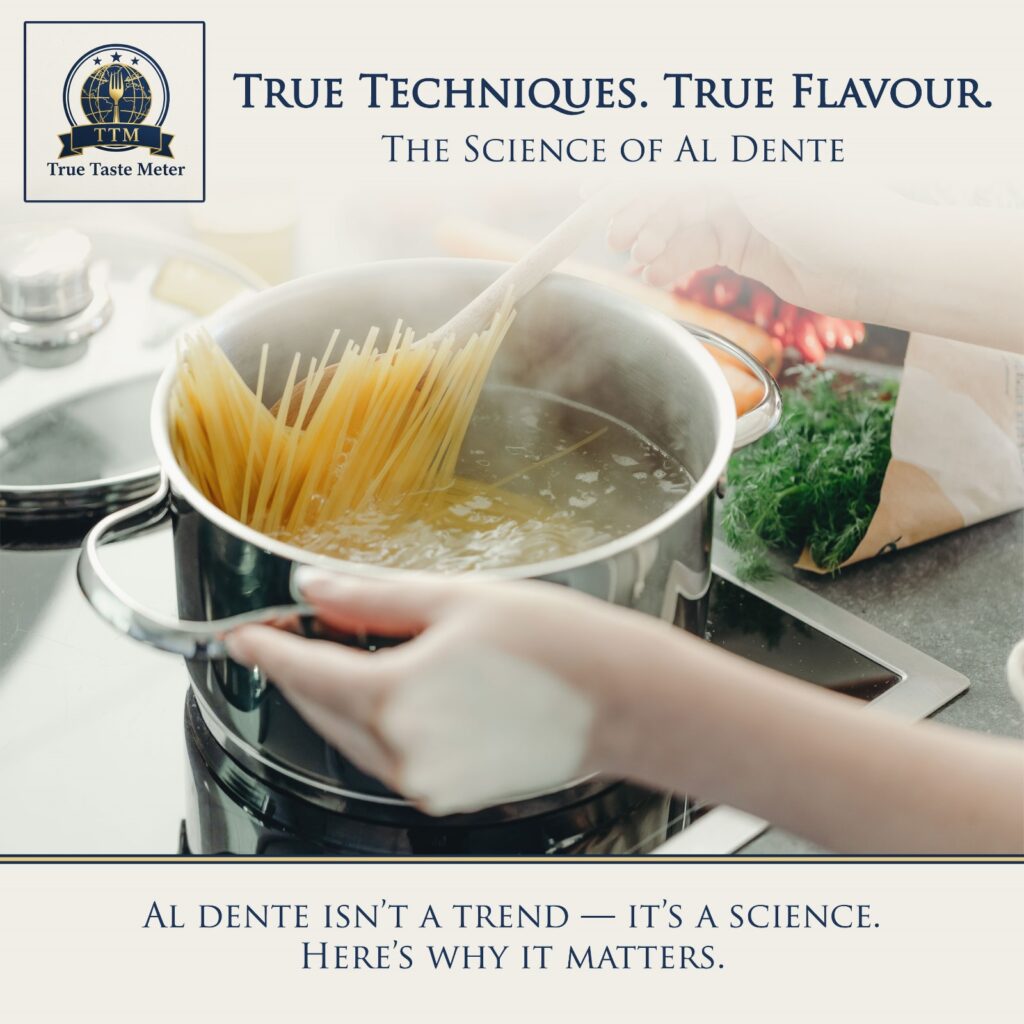
When Italians talk about pasta, one rule stands above all others: it must be cooked al dente. Literally meaning “to the tooth,” al dente describes pasta that is firm, structured, and slightly resistant when bitten. It isn’t undercooked. It’s correctly cooked. And behind this deeply rooted tradition lies real food science that explains why Italians stop the cooking process earlier than many other cultures do.
Below is a clear, simple look at the science, technique, and authenticity behind this essential part of Italian cooking.
What Al Dente Actually Means
Al dente pasta is not hard or chalky. True al dente has a very specific texture:
- A firm, springy bite
- A smooth outer surface
- A gently resistant centre
- Enough structure to hold its shape when tossed in hot sauce
It is the opposite of the soft, swollen, slightly mushy texture that appears when pasta is cooked past its ideal point.
The Science Behind the Bite
Starch Gelatinisation
As pasta cooks, its starch granules absorb water and swell. If they cook for too long, the granules burst and release starch, making pasta sticky and soft.
Stopping the process at the right moment preserves:
- Structure
- Texture
- The ability to hold sauce
Overcooked pasta has gone beyond this stage, and that’s why it loses its shape and becomes mushy.
Protein Structure
High-quality Italian pasta is made from durum wheat. During cooking, its proteins create a network that gives pasta its firm, elastic texture.
When pasta is cooked to al dente, this protein structure stays strong. If cooked too long, it weakens and becomes limp.
That signature “bite” Italians love is directly tied to this protein network.
Better Sauce Absorption
Italian cooking is not pasta followed by sauce. It is pasta with the sauce.
Finishing pasta in the pan brings magic:
- It absorbs flavour
- It coats evenly
- It thickens the sauce naturally through gentle starch release
If pasta is fully cooked in the water, the structure closes up and stops absorbing flavour. The sauce simply slides off.
Lower Glycaemic Impact
Because al dente pasta is less broken down, it digests more slowly. This means:
- A steadier release of energy
- Less of a spike in blood sugar
Many Italians consider al dente not only better for taste but better for the body too.
Why Italians Don’t Overcook Pasta
For Italians, pasta is a craft. Timing is respect.
Overcooked pasta feels:
- Heavy
- Lifeless
- Disconnected from its sauce
Al dente shows care, technique, and knowledge passed down through generations.
How to Achieve Perfect Al Dente Every Time
Use Plenty of Boiling Water
Pasta needs space to move freely so it cooks evenly.
Salt the Water
The water should taste like a light broth. This seasons the pasta from the inside out.
Taste, Don’t Time
Packet timings are guidelines. Start checking the pasta two minutes before the shortest recommended time.
Stop Just Before It’s Done
If the centre is still slightly firm, that’s the moment to remove it.
Finish It in the Sauce
Move the pasta straight into the pan with your sauce. Add a spoonful of pasta water. Let everything simmer together for one or two minutes. This final step creates the true Italian texture and flavour.
Authenticity in Every Bite
Around the world, people often cook pasta until it becomes very soft because they assume softness means “done.”
In Italy, softness simply means overcooked.
Al dente is the authentic method because it is:
- Scientifically balanced
- Texturally superior
- Better at holding sauce
- True to regional Italian tradition
Mastering al dente is one of the key steps in cooking Italian food the way Italians actually eat it.
Final True Taste Meter Verdict
Al dente pasta isn’t undercooked. It’s perfectly cooked.
The technique is built on science, tradition, and the desire to bring out the best in every ingredient.
If you want your Italian dishes to taste truly authentic, mastering al dente is one of the most important skills you can learn.